 Iasora
Baby colic and crying: what's normal and how to soothe
In short: all babies cry, and crying usually builds over the first weeks. Colic is when a healthy baby cries for more than 3 hours a day, 3 days a week, for at least a week — often in the late afternoon and evening. It peaks around 6 weeks and nearly always settles by 3 to 4 months. Holding, rocking and time help; drops and herbal remedies don't. And however exhausted you are, never shake a baby.
Crying can be a sign of illness. Go to the clinic or casualty now if your baby:
- has a weak, moaning or high-pitched cry that's different from usual;
- won't feed, or is feeding much less;
- is floppy, very sleepy or hard to wake;
- has a temperature of 38 °C or more, or feels cold;
- is struggling to breathe, or has blue, grey or very pale lips or skin;
- vomits forcefully, brings up green or yellow vomit, or has blood in vomit or poo;
- has a swollen, hard tummy, or cries more when it's touched;
- has a fit, or a rash that doesn't fade when you press a glass on it;
- hasn't had a wet nappy in 8 hours or more.
See the full list in danger signs: when to take your child to hospital. In an emergency, call 10177 for an ambulance or 112 from a cellphone.
How much crying is normal for a baby?
Crying is how your baby tells you they need something. The usual reasons are simple:
- hunger;
- a wet or dirty nappy;
- being tired;
- wanting to be held;
- wind;
- being too hot or too cold;
- too much noise, light or handling.
According to the American Academy of Pediatrics, fussing tends to build to around 3 hours a day by 6 weeks and drops to 1 to 2 hours a day by 3 to 4 months. So a 1-month-old who cries a lot in the evening is often well within normal.
What is colic? The "rule of 3s"
Colic means a lot of crying, with no obvious cause, in a baby who is otherwise healthy. The NHS uses this rule:
| Rule | What it means |
|---|---|
| More than 3 hours a day | Adding up all the crying spells |
| 3 or more days a week | Not just one bad day |
| For at least 1 week | It keeps happening |
A colicky baby often cries hard, goes red in the face, pulls up their legs, clenches their fists and is hard to settle. It tends to be worse in the late afternoon and evening. It starts in the first few weeks and usually goes by 3 to 4 months, occasionally lasting until 6 months. Nobody knows exactly what causes it. It isn't your fault, and it doesn't mean your milk isn't good enough.
Before assuming it's colic, ask the clinic nurse or doctor to check your baby to rule out a hernia, an infection or another problem. Take the Road to Health Book: the weight chart shows whether your baby is growing well (see baby weight and height by age).
How to soothe a colicky baby
Nothing works every time. Try one thing at a time, calmly:
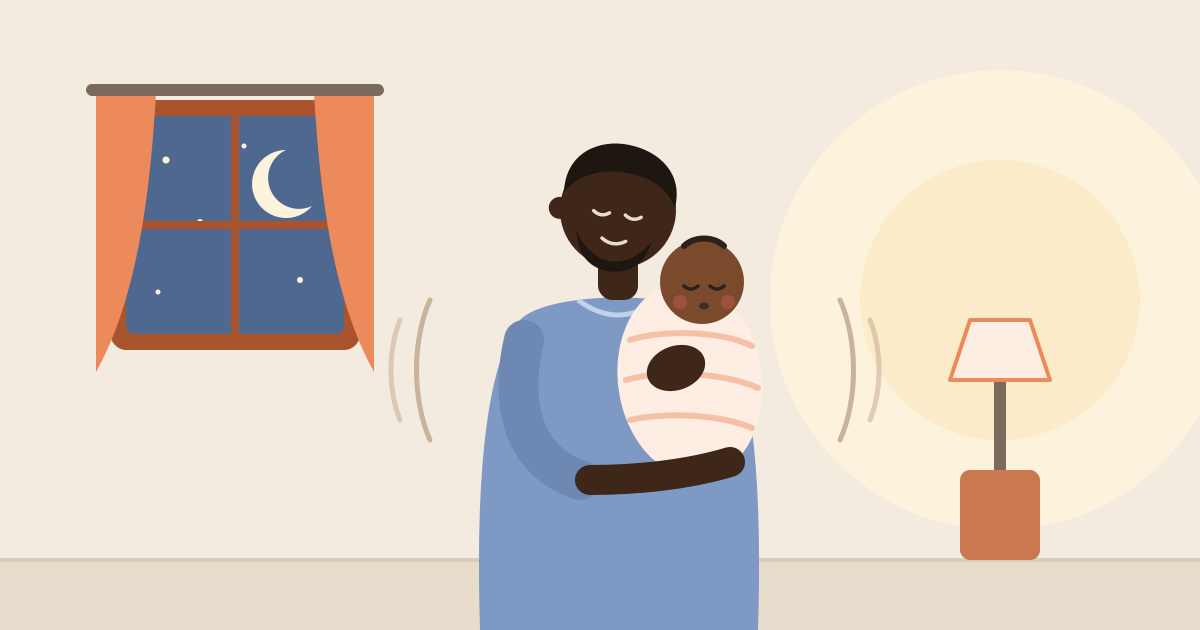
- Hold them. Picking up a crying baby won't spoil them. Carrying your baby close in a sling or a blanket on your back calms many babies.
- Movement. Gentle rocking, walking around the house, a walk in the pram.
- Steady sound. Soft singing, a repeated "shhh", a fan or a quiet radio.
- Tummy-down across your lap while you rub their back. If they fall asleep, put them down on their back in their cot.
- A warm bath or gentle tummy massage.
- Swaddle in a thin blanket — not tight around the hips, and not too warm.
- Less stimulation. A calm, dim room with fewer people.
Feeding and burping
- Keep breastfeeding as normal. The NHS says breastfeeding mothers don't need to change their diet because of colic. If you want to try cutting out a food, talk to your clinic first.
- Keep your baby more upright during feeds and burp them afterwards over your shoulder.
- If your baby has formula, don't switch brands or types on your own — ask at the clinic.
Reflux or colic?
Bringing up a little milk after feeds is common in the first year. If your baby is happy and gaining weight, it usually isn't a problem. Talk to your clinic if your baby coughs or gags a lot during feeds, is very unsettled while feeding, cries non-stop or isn't gaining weight. It's urgent if the vomiting is forceful, green or yellow, has blood in it, or your baby can't keep anything down.
Never shake a baby
Crying that won't stop wears anyone down. Those are exactly the moments when shaken baby injuries happen. The CDC warns that shaking a baby can cause brain damage, blindness and death — as many as 1 in 4 babies with this kind of injury die. Babies under 1 are at greatest risk.
When you feel you can't take any more:
- Put your baby down on their back in a safe place — their cot, with nothing loose around them.
- Leave the room for 5 to 10 minutes. Breathe, drink some water, step outside.
- Go back and check on your baby.
- Ask for help: a gogo, a neighbour, your partner. Leave your baby only with someone calm you trust, never with someone who loses their temper easily.
Leaving a baby to cry for a few minutes somewhere safe is far better than holding them while you're losing control. Share this with everyone who looks after your baby.
Looking after yourself: baby blues and postnatal depression
Feeling low, tearful or irritable in the days after birth is very common and usually passes within 2 weeks. If it lasts longer, gets worse or you feel you can't cope, it may be postnatal depression. It can start any time in the first year and can affect fathers and partners too. Signs include:
- feeling sad most days, with no interest in anything;
- feeling like a bad parent, constant guilt;
- anxiety, not sleeping even when the baby sleeps;
- finding it hard to bond with your baby.
It isn't weakness, and it can be treated. Tell the nurse at your baby's clinic visit or your own check-up. SADAG runs free 24-hour lines: the Suicide Crisis Helpline on 0800 567 567 and the Cipla Mental Health Helpline on 0800 456 789. If you have thoughts of harming yourself or your baby, get help today and don't stay alone with your baby.
What to avoid
- Gripe water, "colic drops" and herbal remedies: the NHS doesn't recommend them, because there's no evidence they help.
- Honey before 1 year — not even on a dummy. It can cause infant botulism, a very serious illness.
- Alcohol, to drink or rubbed on the skin — never.
- Water, rooibos, porridge or other foods before 6 months "to fill them up": the WHO recommends breast milk only for the first 6 months, not even water.
- Vigorous massage, spinal or cranial manipulation.
- Letting your baby sleep on their tummy or in a car seat overnight.
When to go back to the clinic (not urgent)
- you're worried about the crying or nothing seems to help;
- you feel you're struggling to cope;
- your baby isn't gaining weight;
- heavy crying continues after 4 months.
Trust your instincts: nobody knows your baby better than the person who cares for them every day. If the crying sounds different to you, that's reason enough to go.
Sources
- Colic — NHS
- Colic — AAP — HealthyChildren.org
- Soothing a crying baby — NHS
- About abusive head trauma — CDC
- Reflux in babies — NHS
- Foods to avoid giving babies and young children — NHS
- Infant and young child feeding (fact sheet) — WHO
- Postnatal depression — NHS
- Helplines — South African Depression and Anxiety Group (SADAG)
This article is general information, written by the Iasora team from the sources above. It does not replace a consultation or the judgement of a health worker who sees your child. If in doubt, go to your nearest clinic.