 Iasora
Cough and breathing problems in children: cold, pneumonia, wheeze or croup?
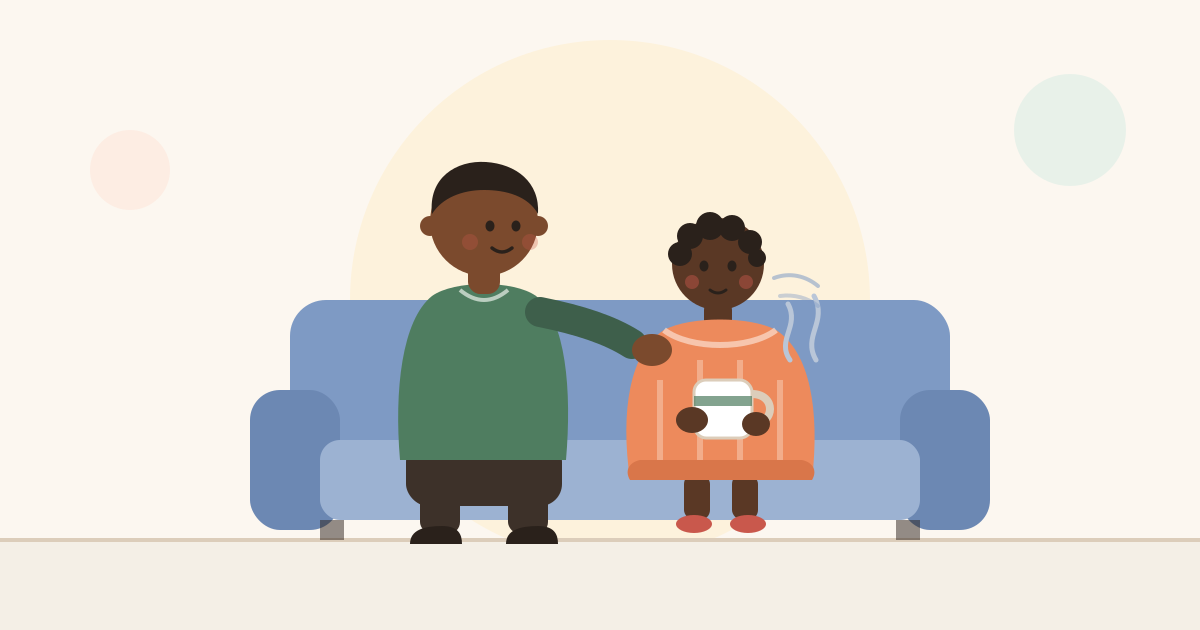
In short: most coughs in children are colds and get better on their own. What matters is the breathing. A child with a cough who breathes fast, or whose lower chest sucks in with each breath, may have pneumonia and needs to be seen at the clinic today. A cough that lasts more than 2 weeks needs a TB check.
Go to casualty now, or call an ambulance (10177, or 112 from a cellphone), if your child with a cough:
- Cannot drink or breastfeed, or vomits everything.
- Has had a fit (convulsion), or is floppy, very sleepy or hard to wake.
- Has the lower chest sucking in with each breath (chest indrawing), or grunts as they breathe.
- Makes a harsh, high-pitched noise breathing in, even when calm (stridor).
- Has blue or grey lips, tongue or skin.
- Has pauses in breathing, or goes blue or breathless after a coughing fit.
- Is a baby under 2 months who is coughing or breathing fast.
Is my child's cough normal?
Coughing is how the body clears mucus from the airways. Young children catch several colds a year, and the cough can hang on for a week or two after the runny nose has cleared.
The question to ask at 10pm is not "how much is she coughing?" but "how is she breathing?" A child who coughs but breathes calmly, plays and eats nearly as usual almost always has a mild infection. A child who coughs and breathes fast or with effort, or who stops eating, needs to be checked.
How to count your child's breaths
This is the single most useful thing you can learn. Clinic nurses do it for every child with a cough, using the IMCI (Integrated Management of Childhood Illness) guidelines from the National Department of Health.
- Wait until your child is calm, ideally asleep. Crying and fever both speed up breathing.
- Lift their top so you can see the tummy and chest.
- Count each time the tummy or chest rises, for one full minute, using a watch or your phone.
- If you are not sure, count again.
| Age | Fast breathing is |
|---|---|
| Under 2 months | 60 or more breaths a minute |
| 2 to 12 months | 50 or more breaths a minute |
| 12 months to 5 years | 40 or more breaths a minute |
If your coughing child is breathing at these rates, take them to the clinic the same day. It is not a diagnosis — it is the signal that a nurse or doctor needs to examine them.
What chest indrawing looks like
In a healthy child, the chest expands when they breathe in. With chest indrawing, the lower chest wall, just under the ribs, pulls inwards each time they breathe in. It means the child is working hard to breathe. Don't wait for the morning — go now.
Cold, pneumonia, bronchiolitis, wheeze, croup or whooping cough?
Only a health worker can tell you what your child has. But knowing the common patterns helps you know what to watch.
- Common cold: runny or blocked nose, sneezing, mild fever, cough. Breathing stays calm. It clears on its own, though the cough lingers.
- Pneumonia: an infection of the lungs. Cough and/or difficult breathing, often with fever and fast breathing, and chest indrawing when severe. The WHO counts it among the leading killers of children under 5 — and it is treatable, so early care matters.
- Bronchiolitis: affects babies and children under 2. It starts like a cold, then after a few days brings a cough, faster breathing, wheezing and trouble feeding. Babies under 6 months and those born early are at higher risk.
- Asthma and wheeze: a whistling sound on breathing out, coughing mostly at night or with exercise, breathlessness that comes and goes. Smoke, dust and colds are common triggers. If your child uses an inhaler, a spacer helps the medicine reach the lungs — ask the clinic to show you how. The WHO notes that a spacer made from a 500 ml plastic bottle can work as well as a bought one.
- Croup: a barking, "seal-like" cough, hoarse voice and a rasping noise when breathing in, usually worse at night. Keep your child sitting up and calm. The NHS advises against steam and steamy bathrooms. If the noise is there when your child is calm, or they are struggling to breathe, go now.
- Whooping cough (pertussis): starts like a cold; about a week later come coughing fits that last minutes, sometimes with a "whoop" as the child gasps in. Young babies may not whoop but can turn blue or stop breathing after a fit — this is an emergency. Vaccination protects; check the doses in the Road to Health Book.
A cough for more than 2 weeks: think TB
The South African IMCI guidelines ask health workers to screen every sick child for TB. Ask for a TB check if your child has:
- A cough that has lasted more than 2 weeks.
- Fever for more than 7 days.
- Weight loss, or is not growing well (look at the growth chart in the Road to Health Book).
- A close contact — someone at home, or who spends a lot of time with the child — who has had TB in the last 12 months.
According to the WHO, the African Region had a quarter of the world's new TB cases in 2024 and carries the highest burden of TB linked to HIV. TB in children can be hard to diagnose and needs specific tests, so tell the clinic how long the cough has lasted and whether anyone at home has TB. The BCG vaccine given at birth protects against severe forms.
Home care for a mild cough
- Fluids and breastfeeding: keep breastfeeding and offer drinks often. Fluids thin the mucus.
- Clear the nose: saline drops in the nose before feeds help a baby breathe and feed.
- Honey only over 1 year: for a child older than 1, a little honey can ease a night-time cough. Never give honey to a baby under 1 — it can cause infant botulism.
- No cough and cold medicines for young children: the American Academy of Pediatrics does not recommend over-the-counter cough and cold medicines for children under 4, and for ages 4 to 6 only if a doctor advises it.
- Avoid harmful home remedies: don't rub paraffin or alcohol on the chest, don't put anything but saline in the nose, and don't give hot drinks that could scald.
If there is a fever as well, read our guide to fever in babies and children — and if you live in or have visited a malaria area, a fever needs a malaria test.
Smoke in the home
Cooking or heating with wood, coal or paraffin indoors, and smoking around children, raise the risk of pneumonia and asthma. UNICEF reports that almost half of all pneumonia deaths are linked to air pollution. What helps:
- Cook outside or in a well-ventilated space, with the child away from the fire or stove.
- Never smoke indoors or near your child.
- Open doors and windows when you can, even in winter.
Prevention
- Vaccines on time: the WHO calls vaccination against pneumococcus, Hib, measles and whooping cough the most effective way to prevent pneumonia. See the South African vaccination schedule.
- Exclusive breastfeeding for 6 months boosts your baby's defences.
- Good nutrition: undernutrition is the biggest risk factor for dying of pneumonia.
- Handwashing with soap, especially before handling the baby.
When to go to the clinic
The same day if your child is breathing fast (table above), has a fever with the cough, is feeding or eating much less, or is a baby under 6 months whose cough is getting worse.
Straight away, to casualty, if you see any sign in the red box at the top. For more, read danger signs: when to take your child to hospital.
A routine visit if the cough has lasted more than 2 weeks, keeps coming back at night or with exercise, or your child is not growing well.
It helps to note down when the cough started, how many breaths a minute you counted and whether there was fever. If you use Iasora, you can log this in your child's profile and show it at the clinic.
This article is for information and does not replace an examination by a health worker. If you are worried about your child's breathing, go to the clinic.
Sources
- Integrated Management of Childhood Illness (IMCI) chart booklet, 2019 (updated) — National Department of Health, South Africa
- Pneumonia in children — fact sheet — WHO
- Childhood pneumonia: Everything you need to know — UNICEF
- Tuberculosis — fact sheet — WHO
- Asthma — fact sheet — WHO
- Bronchiolitis — NHS
- Croup — NHS
- Whooping cough — NHS
- Coughs and Colds: Medicines or Home Remedies? — AAP — HealthyChildren.org
- Know who you can call in an emergency — Western Cape Government
This article is general information, written by the Iasora team from the sources above. It does not replace a consultation or the judgement of a health worker who sees your child. If in doubt, go to your nearest clinic.