 Iasora
Prepare for your child's clinic visit with AI: timeline, questions and what to bring

In short: AI is good at tidying up your notes, not at examining your child. Use it before the visit to build a symptom timeline and a list of questions, and afterwards to understand the words on the script or the lab results. Always check what it says with the nurse, doctor or pharmacist. If your child has a danger sign, skip the preparation and go now.
Don't stop to ask AI if your child:
- can't drink or breastfeed, or vomits everything;
- has a fit (convulsion), is very drowsy or hard to wake;
- is breathing fast, struggling to breathe or making noises when breathing;
- is a baby under 2 months with a fever.
Go straight to the clinic or casualty. See all the danger signs.
Why prepare for a clinic visit
Clinic visits are short, and queues are long. The nurse has a few minutes to work out what's going on, and you arrive tired and worried, maybe after a night of no sleep. It's easy to forget what time the last fever spike was or which medicine you gave.
The NHS gives the same advice any experienced nurse would: write down the symptoms, when they started and what makes them better or worse; bring a list of medicines; and pick your 2 or 3 most important questions.
AI helps with exactly that: it takes your scattered notes and hands them back in order. It does not decide whether it's serious. The person who sees your child does.
Step 1: build a symptom timeline
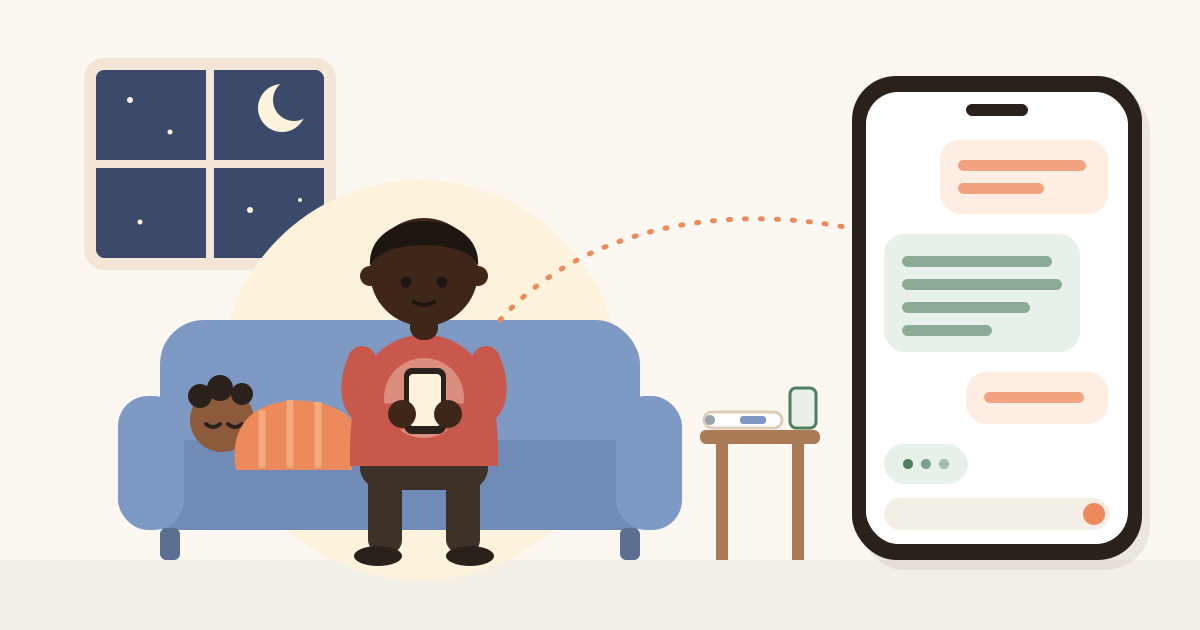
Jot down everything you remember, on your phone or on paper. It doesn't need to be neat. Then ask the AI to put it in order.
What to note:
- When it started: the day, and the time if you know it.
- Temperatures, with times: "Tue 8pm — 38.7", "Wed 6am — 39.2". Say how you measured it (armpit, ear).
- Medicines given, with times: the name on the box and the time. The AI doesn't need the dose, but bring the box to the clinic.
- Feeds and drinks: breast or bottle, how often; refusing; vomiting.
- Wet nappies or toilet trips: how many in 24 hours. One of the best clues to dehydration.
- Stools: how many, watery or not, any blood.
- Anything else: cough, rash, a different cry, sleepiness.
- The trend: better, the same or worse than yesterday?
A prompt you can copy:
"Organise these notes into a timeline by day and time, as a table with columns: time, temperature, medicine given, feeds/drinks, nappies, other signs. Don't add anything I haven't written. At the end, list what information is missing. Child is 14 months old. Notes: [paste your notes here]"
Notice the "don't add anything I haven't written". AI sometimes fills gaps with things that sound right. Read the table at the end and fix it.
And leave out your child's name and ID number: the age is enough. We explain why in your child's health data and AI.
Step 2: questions to ask the nurse or doctor
Ask the AI to suggest questions based on the timeline. Then choose the 3 that matter most to you and put them at the top.
Questions that are usually worth asking:
- What do you think it is, and what else could it be?
- Does my child need any tests? When will I get the results, and who do I call if I don't?
- What is each medicine for? For how many days? What do I do if they vomit a dose?
- Which side effects should I watch for?
- How will I know it's working?
- Which signs mean I should come back straight away, before the follow-up date?
- When do I come back? And if it gets worse at night, where do I go?
What to bring to the clinic
Checklist for the door:
- The Road to Health Book (it holds immunisations, growth and past visits; take it to every visit).
- The timeline, printed, handwritten or on your phone.
- Your top 3 questions.
- The boxes or bottles of medicines you've already given, including syrups, over-the-counter and traditional remedies.
- Previous scripts and lab results.
- A clean nappy, water or ORS, and a feed or snack for your child.
- Pen and paper, or someone to come with you and take notes.
Don't hide traditional or home remedies you've already used. The nurse needs to know everything your child has taken to choose a treatment safely.
During the visit
- Start with what worries you most. Show the timeline.
- If you don't understand a word, ask them to repeat it or write it down. The NHS recommends exactly this.
- Before you leave, repeat the plan in your own words: "So I give this every 8 hours for 5 days and come back on Friday, or sooner if…". That's how you check you've understood.
Step 3: after the visit, understand the script and results
At home, when things are calmer, you can ask AI to explain words you didn't follow. For example:
- "What does 'tds' mean on a script?"
- "What is amoxicillin usually used for?"
- "On a blood test, what does haemoglobin measure?"
Type the word instead of uploading a photo of a script with your child's name on it.
Three rules for this part:
- AI explains, it doesn't change anything. Never change the dose, the times or the number of days because of what AI said. If its answer doesn't match the script, ask the pharmacist or go back to the clinic.
- "Normal" values depend on age and on the lab. Ask the clinician to explain your child's result.
- If something scares you, phone or go back. Don't spend the night asking a chatbot.
Step 4: a follow-up plan
Ask the AI to turn what the clinician said into a simple plan with times:
- a medicine schedule, with boxes to tick off each dose;
- the date of the next visit or of the results;
- the signs that mean you come back straight away (copy them from what the clinician told you, not from what the AI makes up).
Keep the plan with the Road to Health Book.
If you keep your child's record in an app, showing the history straight to the clinician can help. In Iasora, for example, you can share the record with a clinician using a code that expires by itself, limited to the sections you choose.
What AI can't do for you
WHO's principles for AI in health say that humans should stay in control of medical decisions. AI can't see your child's colour, hear their breathing or feel their tummy. Use it to arrive better organised, and leave the examination and the diagnosis to the person in the room.
To ask AI better questions day to day, read how to ask AI about your child's health. If the worry is a fever, see fever in babies and children.
Sources
- What to ask your doctor — NHS
- Minister Theuns Botha launches Road to Health Booklet — South African Government (gov.za)
- WHO issues first global report on AI in health and six guiding principles for its design and use — WHO
This article is general information, written by the Iasora team from the sources above. It does not replace a consultation or the judgement of a health worker who sees your child. If in doubt, go to your nearest clinic.